


20th Festival of Tolerance in Zadar: Fatherland opens the jubilee, The Black Sphere closes it
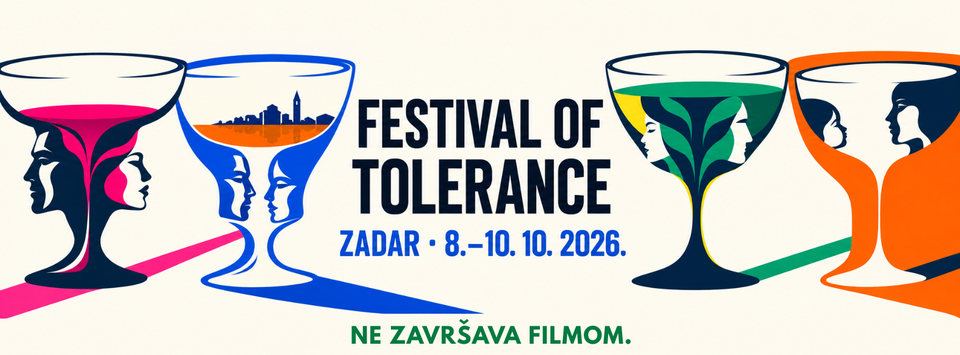
The 20th Festival of Tolerance will take place from October 8 to 10, 2026, in Zadar at the Rector's and Providur's Palaces. The jubilee edition will open with Fatherland by Paweł Pawlikowski and close with The Black Ball (La bola negra) by Javier Calvo and Javier Ambrossi. Pawlikowski, along with Calvo and Ambrossi, shared the award for Best Director at this year's Cannes Film Festival. Admission to all festival programs will be free.
Fatherland follows Thomas Mann and his daughter Erika upon their return to Germany in 1949. The Black Ball, adapted from Albert Conejero's play La Piedra Oscura, connects the lives of three men across three eras of a divided Spain. Lorca's legacy is present in the film from start to finish. Two films from the Cannes Film Festival thus open and close an edition in which history is not merely a backdrop, but a force that alters the characters' lives.
Among the first titles announced by the Festival is Mr. Nobody Against Putin by David Borenstein and Pavel Talankin, winner of the Academy Award for Best Documentary Feature in 2026 and the Special Jury Award at Sundance in 2025. One in a Million by Itab Azzam and Jack MacInnes won the Audience Award and the Directing Award in the World Cinema Documentary competition at Sundance in 2026. Deaf (Sorda) by Eva Libertad won the Panorama Audience Award and the CICAE Art Cinema Award at the Berlinale.
Three films, three lives at a point where standing on the sidelines is no longer an option: an individual standing up to propaganda, a young woman growing up between the loss of home and new beginnings, and a woman entering motherhood in a world that still struggles to hear her story.
That is perhaps the best short description of this year's program: films that, through their framing, rhythm, and proximity to the characters, immerse us so deeply in someone else's experience that we no longer observe it from the outside, but feel it as our own.
The program was selected by Snježana Tribuson, Boško Picula, and Ivica Perinović. At the forefront of the selection are the director's vision, the characters, and the way cinema constructs their world. History, war, politics, belonging, and responsibility permeate family, relationships, and everyday decisions. Varied in tone, rhythm, and cinematic language, these films trust the audience and what goes unsaid to remain fully understood.
The Festival of Tolerance grew out of the Zagreb Jewish Film Festival, the culture of Holocaust remembrance, and the public activism of Branko Lustig. His testimony and encounters with young people laid the foundation from which the Festival, over the course of twenty editions, opened itself to other experiences of persecution, discrimination, war, and forced displacement.
"From Branko Lustig, I learned that remembrance that does not change our attitude toward the living becomes merely a ritual. That is why this is not a celebration of the past, but a promise for the future: that we will remain brave, restless, and true to ourselves. That we will judge less, understand more, and always see the human being first," stated Nataša Popović, Director of the Festival of Tolerance.
The film screenings will be accompanied by Tolerance Talks, moderated by host and educator Izabela Laura as part of a program the Festival has been developing for over a decade. The event also features an educational program for children, youth, and teachers. The full film lineup and discussion panel participants will be announced soon on the festival website and social media channels.
Zadar holds a special place for the Festival, in part due to its European heritage of peace. The city is a member of the European Network of Places of Peace, and the Monastery of St. Francis - site of the signing of the Treaty of Zadar in 1358 - was awarded the European Heritage Label this year as part of the "Places of Peace" ensemble. A special connection is also borne by the II Palaces complex: the Rector's Palace and the Providur's Palace, which suffered severe damage during the shelling of Zadar in 1991, are today a restored hub of the city's cultural life and the home of the Zadar Concert Office.
The Zadar Concert Office becomes the main long-term partner of the Festival of Tolerance in Zadar and will participate in its future program development. The collaboration begins right at the opening of the 20th edition, featuring a screening of Fatherland alongside a concert connected to the film and the music of Johann Sebastian Bach.
The 20th Festival of Tolerance is organized by the Association Festival of Contemporary Jewish Film Zagreb, with the support of the City of Zadar, the Croatian Audiovisual Centre (HAVC), UNHCR, and other partners.
Partners and supporters were not involved in the selection of films, nor does their support imply endorsement of the films' content or messages.
All information about the program will be available on the official website www.festivaloftolerance.com and the Festival's official channels (Facebook, Instagram).
Admission to all programs is free.